
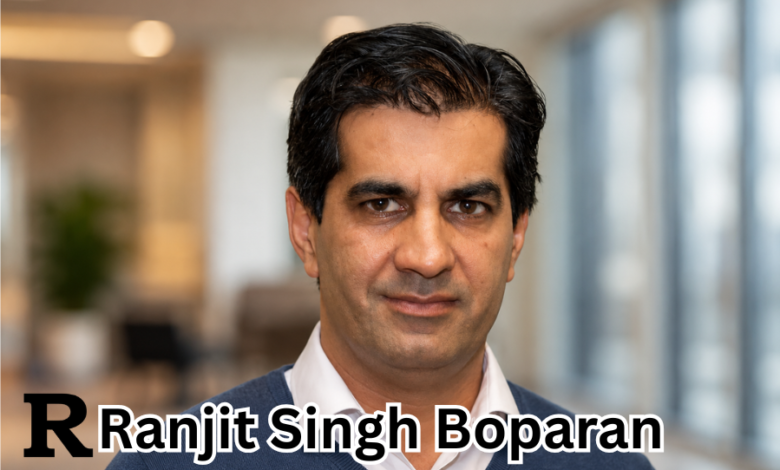
Ranjit Singh Boparan has spent more than three decades building one of the most significant privately controlled food businesses in Britain. Best known as the founder of 2 Sisters Food Group, he has become closely associated with poultry production, ready meals, food manufacturing and restaurant brands.His public profile is unusual for a businessman whose companies are deeply embedded in everyday consumer life. Shoppers may encounter products made by businesses connected to his group without seeing the Boparan name. His interests range from supermarket poultry and prepared foods to restaurant chains including Carluccio’s and Slim Chickens.
That scale explains why Boparan is frequently described in the British media as the “Chicken King”, but his career now reaches far beyond poultry alone.
Quick Bio
| Detail | Information |
|---|---|
| Full Name | Ranjit Singh Boparan |
| Born | August 1966 |
| Birthplace | Bilston, West Midlands, England |
| Nationality | British |
| Profession | Businessman and Entrepreneur |
| Known For | Founder of 2 Sisters Food Group |
| Current Role | Founder and President of 2 Sisters Food Group |
| Industry | Food Manufacturing and Hospitality |
| Major Business Interests | 2 Sisters Food Group and Boparan Restaurant Group |
| Notable Restaurant Brands | Carluccio’s, Gourmet Burger Kitchen, Giraffe and Slim Chickens |
| Spouse | Baljinder Kaur Boparan |
| Estimated Wealth | More than £1 billion for the Boparan family, according to established rich-list estimates |
| Notable Nickname | “Chicken King” |
| Charitable Work | Associated with the Boparan Charitable Trust |
From a Butcher’s Shop to West Bromwich
Boparan was born in August 1966 in Bilston, in the West Midlands. Public accounts of his early life describe him leaving school at 16 and working in a local butcher’s shop, an experience that placed him close to the practical side of the food trade before he became an entrepreneur.
The story of 2 Sisters Food Group began in 1993, when he started a poultry operation in West Bromwich. The early business focused on cutting and packing frozen poultry portions for retailers.
It was a modest starting point for a company that would become one of the UK’s largest food manufacturers. 2 Sisters gradually moved deeper into the supply chain and broadened its production capabilities.
By 2000, acquisitions of sites at Scunthorpe and Flixton helped move the business into primary poultry production. Further expansion followed, adding processing capacity and a wider presence across the food industry.
This pattern became central to Boparan’s approach: build scale, add capabilities and deepen relationships with major retailers.
The Deal That Changed the Scale of 2 Sisters
A major turning point came in 2011 when 2 Sisters acquired Northern Foods, a long-established British food manufacturer.
The transaction substantially widened the group’s reach beyond poultry. Northern Foods had extensive interests in chilled and prepared foods, giving Boparan a much larger position in ready meals, bakery and other supermarket products.
The acquisition changed the perception of the business. 2 Sisters was no longer simply a fast-growing poultry company; it had become a diversified food-manufacturing group with major customers across British grocery retail.
Further acquisitions strengthened its poultry and prepared-food operations, while Boparan’s wider commercial interests continued to expand.
Growth on this scale brought complexity. Large manufacturers face pressure from energy costs, labour, commodities, retailer negotiations and supply-chain disruption. Later years focused more on simplifying operations, strengthening the balance sheet and investing in core businesses.
What 2 Sisters Food Group Does Today
2 Sisters Food Group remains the company most closely associated with Ranjit Singh Boparan. Its operations cover poultry and meal solutions, supplying major retailers and food-service customers.
The company produces poultry, pizzas, ready meals, soups, sauces and bakery products. Its customer base has included many of Britain’s largest supermarkets, making the business an important but often largely invisible part of the country’s food infrastructure.
Boparan moved away from the chief executive role in 2018 and became President, allowing him to remain closely involved in strategic direction. Recent company announcements continue to identify him as founder and President.
From Food Factories to Restaurant Brands
Boparan’s interests are not confined to manufacturing. Through Boparan Restaurant Group and related family investments, the wider portfolio has developed a significant presence in hospitality.
The restaurant group operates a broad portfolio of hospitality brands across more than 100 locations. Its best-known names include Carluccio’s, Gourmet Burger Kitchen and Giraffe, alongside other restaurant concepts.
Slim Chickens has become another important part of the group’s hospitality story, with the American-style chicken brand expanding through franchising in the UK and international markets.
The restaurant portfolio shows a different side of Boparan’s strategy. Manufacturing depends on scale and retailer relationships; restaurants depend on consumer-facing brands, locations and customer experience.
Why Food Security Has Become a Bigger Part of His Message
In recent years, Boparan has increasingly spoken publicly about the resilience of Britain’s food system.
His argument is that food production is being squeezed by inflation, geopolitical conflict, extreme weather, energy costs and dependence on imported inputs. These pressures can move through agricultural and manufacturing supply chains before reaching consumers as higher prices or reduced availability.
In September 2026, he warned that the UK food sector was facing what he described as a “perfect storm” and called for stronger co-ordination between government and industry.
The intervention fits naturally with his position. Few British entrepreneurs operate at the same scale across poultry processing, ready meals and food manufacturing, so disruptions affecting feed, farming, transport, energy or labour can have consequences across his businesses.
His broader message is that food security also depends on manufacturing capacity, infrastructure, technology, affordability and commercially viable suppliers.
The Next Generation Strategy
2 Sisters has been promoting a transformation programme often referred to as its Next Generation or NextGen strategy.
The plan centres on modernising production, improving efficiency and making the supply chain more sustainable. Boparan has associated the programme with major long-term investment in supply chains, technology, animal welfare and lower-impact food production, alongside a stated ambition to reach Net Zero carbon emissions by 2035.
Sustainability matters for large food manufacturers because emissions arise across farming, feed production, processing, transport, refrigeration and packaging. Reducing environmental impact therefore requires changes beyond a single factory.
Boparan has presented this investment agenda as both an environmental and competitiveness issue. More efficient plants can reduce waste and energy use while helping the company manage rising costs and maintain supply for retailers.
That combination of scale, technology and food-security concerns increasingly defines the current phase of his career.
Ranjit Singh Boparan’s Wealth
Boparan’s wealth attracts considerable interest because his companies remain privately controlled and operate on a substantial scale.
The Sunday Times Rich List has repeatedly included the Boparan family. In 2025, published estimates placed the family fortune at more than £1 billion, reflecting interests that include 2 Sisters Food Group and restaurant businesses.
Such figures should be treated as estimates rather than precise statements of personal wealth. Rich-list calculations generally rely on identifiable business holdings, assets, debt and other available financial information. They do not capture every private asset or liability.
It is therefore more accurate to describe Boparan as a billionaire according to established rich-list estimates than to present any single figure as a confirmed personal net worth.
Family, Privacy and Philanthropy
Boparan is married to Baljinder Kaur Boparan, who has also been associated with family-controlled companies and charitable activity.
Despite the scale of their business interests, the couple maintain a relatively low personal profile compared with many high-profile billionaires. Public attention tends to focus more on their companies, acquisitions and charitable work than on their private lives.
The Boparan Charitable Trust supports children and young people affected by disabilities and serious illnesses. Boparan has also taken part in fundraising activities, including the London Marathon, raising money for charitable causes.
This philanthropic work sits alongside a business career primarily defined by food manufacturing and hospitality rather than celebrity.
Conclusion
Ranjit Singh Boparan’s significance lies less in public visibility than in the scale of the businesses he has built. Starting with poultry processing in West Bromwich, he developed 2 Sisters Food Group into a major supplier to British retailers and later expanded his family’s interests into restaurants and hospitality.
Today, his focus increasingly combines food manufacturing with investment, sustainability and concern over Britain’s ability to maintain a resilient domestic food supply. That gives Boparan a distinctive position: not simply as the businessman behind a large private group, but as an influential figure operating across several layers of the UK food system.
FAQs.
What is Ranjit Singh Boparan known for?
Ranjit Singh Boparan is best known as the founder of 2 Sisters Food Group, one of Britain’s largest food manufacturers. He built the company from a poultry operation into a diversified group supplying major retailers with chicken, ready meals and other food products.
Is Ranjit Singh Boparan still involved with 2 Sisters Food Group?
Yes. Boparan stepped down as chief executive in 2018 but remained closely involved with the business. He is currently identified by the company as its founder and President and continues to play a role in strategy and investment.
Why is Ranjit Singh Boparan called the Chicken King?
The nickname comes from the scale of his involvement in the British poultry industry. 2 Sisters Food Group processes millions of birds each week and supplies a substantial share of the poultry sold and consumed in the UK.
What restaurants are associated with the Boparan business empire?
Boparan Restaurant Group operates brands including Carluccio’s, Gourmet Burger Kitchen and Giraffe, while Slim Chickens is an important growth and franchise brand within the wider hospitality portfolio.
What is Ranjit Singh Boparan’s net worth?
His exact personal wealth is not publicly verified. Established rich-list estimates have valued the Boparan family fortune at more than £1 billion, based largely on business interests. The figure should be understood as an estimate rather than a confirmed cash value.
READ THIS TOO: Simon Arora: the Retail Strategy That Transformed B&M



One Comment