
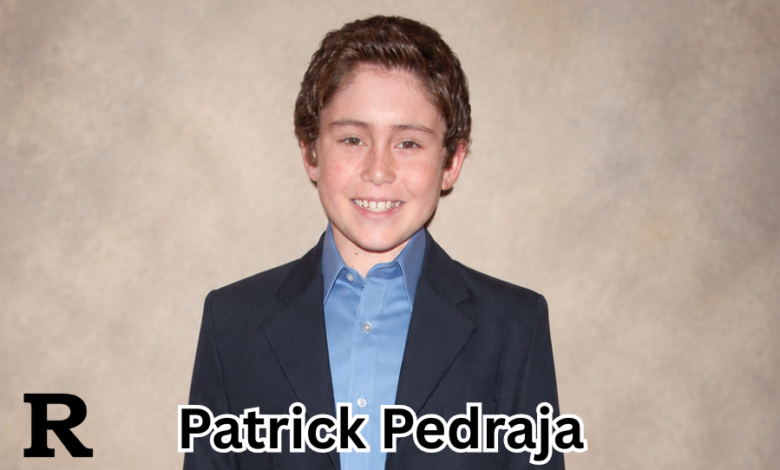
Patrick Pedraja became nationally known in the United States while still a child, not because he was chasing fame, but because a health crisis led him into a public campaign for bone marrow donors. Diagnosed with acute lymphoblastic leukaemia at the age of 10, he learned during treatment that patients from minority backgrounds could face particular difficulty finding suitably matched donors. That discovery became the basis for Driving for Donors, a campaign that took Pedraja and his family across the country to recruit people to the National Marrow Donor Registry.
His story later crossed into television and youth activism, while his younger brother, actor Tucker Albrizzi, also took part in the family’s donor-registration efforts. Patrick’s public profile remains most closely associated with the campaign he launched before reaching his teens.
Quick Bio
| Detail | Information |
|---|---|
| Full Name | Patrick Pedraja |
| Nationality | American |
| Profession | Activist, entrepreneur and actor |
| Best Known For | Founding Driving for Donors |
| Major Cause | Bone marrow donor awareness and registration |
| Health Background | Diagnosed with leukaemia at age 10 |
| Organisation | Driving for Donors |
| Recognition | CNN Heroes recognition, Do Something Award and Huggable Heroes recognition |
| Media Appearances | Television appearances and projects including Sicko |
| Brother | Tucker Albrizzi |
| Net Worth | No reliably verified public figure |
| Known Impact | Helped recruit thousands of potential bone marrow donors across the United States |
The Health Crisis That Changed Patrick Pedraja’s Direction
Pedraja’s public story began with his diagnosis of acute lymphoblastic leukaemia. In a 2007 CNN interview, he described learning about a Hispanic girl who had died after failing to find a suitable marrow match. Pedraja, who identified himself as half Cuban, became concerned by the under-representation of minority donors on the registry and decided that he wanted to act.
The idea developed into Driving for Donors. His family used an RV, often described as the “Donormobile”, to travel across the United States, staging registration events and encouraging people to join the marrow registry. CNN reported in September 2007 that more than 5,000 people had been added within three months; by December, Pedraja told Larry King that the total had passed 6,000, well beyond his original goal of 2,007 registrations.
The campaign centred on a practical problem: many patients needing a marrow transplant rely on an unrelated donor, making registry diversity important. Pedraja therefore focused on widening participation among less-represented communities.
How a Bald Head Became a Fundraising Platform
One of the campaign’s most memorable ideas came directly from chemotherapy. As Pedraja lost his hair, he turned his bald head into advertising space. Sponsors paid for temporary branding, helping fund donor registration and campaign expenses.
CNN recorded Pedraja saying the idea had helped raise roughly $100,000 by late 2007. Later profiles put the total above $150,000 as the campaign expanded. Those figures reflect different stages of an initiative that continued beyond its first national tour.
The concept gave Driving for Donors a striking public hook: a child undergoing cancer treatment was using the visible effects of chemotherapy to finance a donor campaign for others.
CNN Heroes Put the Campaign on a National Stage
Pedraja’s work attracted major media attention in 2007. CNN profiled him in its Heroes coverage, and he appeared on Larry King Live. At the CNN Heroes: An All-Star Tribute event in December that year, viewers selected him for the programme’s Viewer’s Choice recognition.
His acceptance remarks focused on donor recruitment, using the platform to explain how an ordinary registry volunteer could become a life-saving match.
Driving for Donors continued after the first tour. A 2009 announcement for the 2010 Sub City Take Action Tour said the organisation had added more than 22,000 donors to the registry and that more than 24 matches had resulted. The music tour made Pedraja’s cause part of its charity campaign and offered marrow registration at tour stops.
Recognition and Youth Activism Beyond the First Tour
Contemporary profiles credit Pedraja with honours from youth-service and charitable organisations, including a Do Something Award and recognition through Build-A-Bear Workshop’s Huggable Heroes programme. One Build-A-Bear-related account described him as having helped add 15,000 donors while raising about $160,000 by that stage.
He also broadened his interest in social action. An author profile for Inspire Me Today says Pedraja created The Planet Us, a project designed to spotlight people taking practical action on social causes. That move shows how his public identity grew beyond his own experience with leukaemia.
Descriptions of Pedraja sometimes span activist, charity founder, speaker, actor and entrepreneur. His earliest work certainly combined sponsorship sales, public speaking, media appearances and event organisation, giving the project an entrepreneurial character even though its primary purpose was charitable.
Patrick Pedraja’s Acting and Media Work
Pedraja also developed entertainment credits, although acting has never been the main reason for his recognition. His professional résumé on Actors Access lists projects including Dirty Hands Caravan, Uploading to Angels and Michael Moore’s healthcare documentary Sicko, in which he appeared as himself. It also records appearances connected with The Late Late Show with Craig Ferguson, CNN Heroes, Larry King Live and The Today Show.
In the 2009 family film Uploading to Angels, Pedraja was credited as Anthony. His brother Tucker Albrizzi also appeared in the production, giving the siblings another shared screen credit beyond their charity-related media appearances.
His available credits mix acting roles, hosting, interviews and appearances as himself, linking his entertainment work closely with his activism.
Patrick Pedraja and Tucker Albrizzi: The Family Connection
The connection between Patrick Pedraja and Tucker Albrizzi is straightforward: they are brothers. IMDb’s biography for Tucker identifies Patrick as his brother and notes that Tucker helped organise marrow drives connected with Patrick’s charity work.
Tucker, born in Palm Harbor, Florida, later built a larger acting career, with roles in Big Time Rush, Good Luck Charlie, American Vandal and A.P. Bio, as well as film and voice work. His childhood, however, overlapped closely with Driving for Donors. A 2008 National Police Week account described Patrick travelling with his mother, brother Tucker and grandparents while recruiting potential donors.
The brothers also appeared in Sicko and Uploading to Angels, making the family’s donor campaign an important part of understanding how their early public lives intersected.
What Is Patrick Pedraja Doing Now?
Pedraja has kept a much lower public profile in adulthood than during the peak years of Driving for Donors. Reliable recent reporting on his personal life is limited, so claims about relationships, wealth or private circumstances should be treated cautiously.
There is some evidence of current business activity. California corporate-record data reproduced by BizProfile lists Pedraja Productions as an active corporation filed in May 2024, with Patrick Pedraja named in officer roles. The filing describes the business as operating in entertainment and travel consulting. Because matching names can create uncertainty in public-record research, the filing should not be used to infer more than it states.
No credible public source provides a verified figure for Patrick Pedraja’s net worth. Historical charity fundraising, entertainment credits and company filings should not be converted into personal wealth estimates.
Why Driving for Donors Still Defines His Public Legacy
The defining part of Pedraja’s story is the scale of what began as a child’s response to an inequality he encountered during cancer treatment. Contemporary coverage consistently describes him as the young founder behind Driving for Donors and records a rapid expansion from an initial goal of 2,007 new donors to thousands of registrations across the country.
The campaign also showed how publicity could be turned into measurable participation. Television appearances promoted registry recruitment, sponsorships helped cover costs, an RV transformed the project into a travelling event, and later entertainment partnerships introduced the cause to new audiences.
That combination of personal experience, practical organising and inventive fundraising explains why Patrick Pedraja remains associated with youth-led social action long after his most visible campaign years.
Conclusion
Patrick Pedraja’s public story is unusual because its defining achievement came before adulthood. A leukaemia diagnosis exposed him to the shortage of suitably matched marrow donors, and he responded by building Driving for Donors into a travelling national campaign that registered thousands of people and attracted major media attention.
His later acting and media work, his family connection to Tucker Albrizzi and more recent business records add other dimensions to his profile. Yet the central reason his name remains notable is clear: Pedraja used the circumstances of his own treatment to create a practical donor-recruitment effort for patients he had never met.
FAQs.
What is Patrick Pedraja known for?
Patrick Pedraja is best known for founding Driving for Donors after being diagnosed with acute lymphoblastic leukaemia as a child. The campaign travelled across the United States registering potential bone marrow donors, with particular attention to improving participation among under-represented communities.
Is Patrick Pedraja related to Tucker Albrizzi?
Yes. Patrick Pedraja is Tucker Albrizzi’s older brother. Tucker participated in family donor drives during childhood and later became known for acting roles in Big Time Rush, Good Luck Charlie, American Vandal and A.P. Bio.
Did Patrick Pedraja appear in films?
Yes. Pedraja appeared as himself in Michael Moore’s Sicko and has additional acting credits including Uploading to Angels. His résumé also includes television, hosting and media appearances connected with both entertainment and charitable advocacy.
How many donors did Driving for Donors register?
The figure grew as the campaign continued. CNN reported more than 5,000 registrations within three months in 2007, while a 2009 Take Action Tour announcement said Driving for Donors had added more than 22,000 people to the registry since the campaign began.
What is Patrick Pedraja’s net worth?
There is no reliable, publicly verified estimate of Patrick Pedraja’s net worth. Historical charity fundraising totals should not be confused with personal income, and available business records do not provide enough information to calculate his wealth responsibly.
READ THIS TOO: Barry Feehily: The Private Brother Behind Mark Feehily’s Famous Family


One Comment