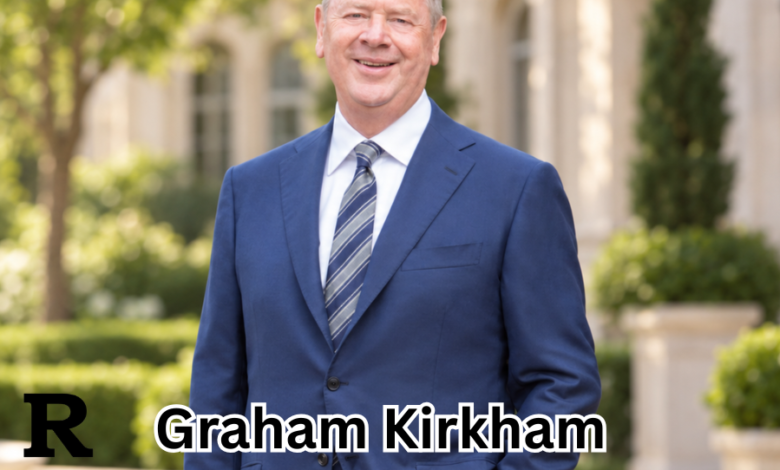
Graham Kirkham is best known for turning a modest furniture operation in South Yorkshire into DFS, one of Britain’s most recognisable sofa retailers. His story also involves decades of ownership decisions, major financial transactions and a public life that extended into the House of Lords.Born in Doncaster in 1944, Kirkham built his career far from the traditional corporate route. He developed his business from the shop floor, focused on direct selling and later oversaw DFS through flotation, privatisation and a major private-equity sale. Today, his name remains associated with British retail, South Yorkshire business, philanthropy and Conservative politics.
Quick Bio
| Detail | Information |
|---|---|
| Full Name | Graham Kirkham, Baron Kirkham |
| Date of Birth | 14 December 1944 |
| Birthplace | Doncaster, South Yorkshire, England |
| Nationality | British |
| Profession | Businessman, entrepreneur and life peer |
| Best Known For | Founder of DFS |
| Business Founded | Northern Upholstery, which developed into DFS |
| Industry | Furniture retail |
| Political Affiliation | Conservative |
| Peerage | Baron Kirkham, created a life peer in 1999 |
| Honours | Knight Bachelor, KCVO |
| Major Business Milestone | Sold DFS to Advent International in 2010 |
| Estimated Wealth | Around £1 billion+, based on rich-list estimates |
| Philanthropy | Graham Kirkham Foundation and support for youth and charitable organisations |
| Known Association | DFS, House of Lords and South Yorkshire business |
The Retail Idea That Became DFS
The foundation of Kirkham’s fortune was a simple commercial observation: furniture could be made and sold directly to consumers without relying as heavily on middlemen. In 1969, he started Northern Upholstery near Doncaster, manufacturing furniture and selling it to the public from the same premises.
Accounts of the company’s early history describe him using space above a snooker or billiards hall, with furniture produced upstairs and sold below. That direct relationship between production and customer helped shape the business model that later underpinned DFS.
Northern Upholstery expanded during the 1970s by adding manufacturing capacity around Doncaster. In the 1980s, the company acquired the assets of DFS Furniture Limited, and the DFS name gradually became the dominant identity of the growing group.
The move was about more than branding. Kirkham had built a closely connected operation in which retail, sourcing and manufacturing could work together, giving the company greater control over price, product range and customer experience.
Turning a Regional Business Into a National Name
DFS became increasingly visible as it expanded across the UK. Television advertising, promotions, price messaging and finance offers helped build awareness, while the company grew geographically, entering new regions as its store network increased.
By the early 1990s, DFS was large enough to enter the stock market. It floated on the London Stock Exchange in 1993 with a market capitalisation of about £270 million and 21 stores, according to the company’s corporate history.
Between 1993 and 2004, DFS added 46 stores and broadened its sources of upholstered furniture. By 2003, it had become the UK’s largest upholstery retailer.
Public ownership was not Kirkham’s final destination. In 2004, DFS was acquired and taken private by a company controlled by him and his family, returning the retailer to private ownership after roughly a decade on the stock market.
The 2010 Sale That Changed His Business Profile
Another turning point came in 2010, when DFS was acquired by global private-equity firm Advent International. The sale ended Kirkham’s controlling ownership of the company he had spent decades building.
DFS continued to expand after the transaction and returned to the London Stock Exchange in 2015. Kirkham’s importance to the business, however, rests on creating Northern Upholstery, acquiring the DFS business and name, and developing the model into a nationally recognised furniture retailer.
After the sale, his public business profile broadened. Reports have linked him with investments including Iceland Foods and restaurant businesses. His current House of Lords register of interests lists directorships in Bilder and Lord Enterprises Limited, described as restaurants, and Richard Aitch Limited. It also records farmland and residential properties in South Yorkshire, plus interests in partnerships owning retail property.
Deep Roots in South Yorkshire
Kirkham’s connection with South Yorkshire has remained prominent throughout his career. In a House of Lords speech in July 2024, marking 25 years since he entered the chamber, he described himself as a life peer of working-class origins, an entrepreneur and a lifelong resident of South Yorkshire.
That regional identity helps explain his public profile. He remained closely associated with Doncaster even after DFS became a national brand, and public records still connect him with property and farmland in the area.
Published profiles describe his father as a coal miner. Kirkham did not follow a university-led route into management; he entered furniture retail, learned the industry through practical experience and eventually started his own operation.
The City of Doncaster has also highlighted his contribution to the area, including local employment created through business ventures and support for charitable causes.
From Retail Entrepreneur to the House of Lords
Kirkham’s public career expanded during the 1990s. He received a knighthood in the 1996 New Year Honours and was created a life peer in 1999.
He entered the House of Lords on 23 July 1999 as Baron Kirkham and has sat as a Conservative peer. UK Parliament records still list him as a current member of the House of Lords in 2026.
His parliamentary profile is not based on a long ministerial career. He has served on House of Lords bodies including the Administration and Works Committee and the Lords Leader’s Group on Governance. Parliament’s current records also show continued participation in divisions and list his registered business and property interests.
Honours and Long-Term Charitable Work
Kirkham’s philanthropic activity has been particularly associated with youth development, outdoor education and grant-making.
He has had a long relationship with The Duke of Edinburgh’s Award and the Outward Bound Trust. In the 2001 Birthday Honours, he was appointed Commander of the Royal Victorian Order, or CVO, in connection with his work involving the Duke of Edinburgh’s Award and Outward Bound.
In 2021, he was appointed Knight Commander of the Royal Victorian Order, or KCVO, after serving as chairman of the trustees of The Duke of Edinburgh’s Award. The honour reflected a lengthy period of involvement rather than a one-off contribution.
The Graham Kirkham Foundation, established in 1991, is another important part of that record. Charity Commission information shows that the grant-making charity supports purposes including education, health, arts and culture, religion and animal welfare.
For the financial year ending 31 July 2025, the foundation reported income of £251,578 and expenditure of £276,589. Its registered trustees are Lord Kirkham, Lady Pauline Kirkham and the Honourable Michael Kirkham, and the Charity Commission states that trustees receive no remuneration or benefits from the charity.
Graham Kirkham’s Net Worth and Wealth
Interest in Graham Kirkham’s net worth is closely tied to the scale of the DFS story. His wealth came principally from furniture retail and the value created through building, floating, privatising and ultimately selling DFS.
Rich-list valuations are estimates, not audited statements of personal wealth. The Sunday Times Rich List for 2026 placed Lord Kirkham and his family at an estimated £1.14 billion, unchanged from 2025.
His current financial interests appear broader than furniture. Parliament’s register records restaurant directorships, farmland, residential property and partnerships linked with retail property. Those interests help explain why his business identity continued after the DFS sale.
Personal Life and Public Profile
Kirkham has generally maintained a lower celebrity profile than many modern billionaire entrepreneurs. Publicly available biographical information identifies him as married with two children, while much of his family life has remained outside the media spotlight.
His public identity is instead dominated by DFS, South Yorkshire, the House of Lords and charitable work. Even decades after Northern Upholstery was founded, the central element of his reputation remains the business he built from a regional furniture operation into a household retail name.
Conclusion
Graham Kirkham’s place in British business history rests on more than the familiar DFS name. He built a furniture operation from modest South Yorkshire beginnings, developed it into a national retailer, navigated public and private ownership, and ultimately converted decades of growth into a substantial family fortune.
His later profile has combined investment interests, a continuing role in the House of Lords and long-term charitable involvement. For readers searching Graham Kirkham today, the defining story remains one of practical retail entrepreneurship: a Doncaster furniture business that grew into one of the most recognisable names in British homes.
FAQs.
What is Graham Kirkham best known for?
Graham Kirkham is best known for founding the business that developed into DFS. He started Northern Upholstery near Doncaster in 1969 and later built DFS into a major national sofa retailer before selling the company to Advent International in 2010.
Is Graham Kirkham still involved with DFS?
Kirkham is no longer the controlling owner of DFS. He and his family took the company private in 2004, but it was sold to Advent International in 2010. DFS later returned to the London Stock Exchange in 2015.
Is Graham Kirkham a member of the House of Lords?
Yes. Kirkham was created a life peer in 1999 and entered the House of Lords on 23 July that year. UK Parliament records list Lord Kirkham as a current Conservative member of the House of Lords in 2026.
What is Graham Kirkham’s estimated net worth?
The Sunday Times Rich List for 2026 estimated the wealth of Lord Kirkham and his family at about £1.14 billion. The figure is an external estimate rather than an exact statement of his personal finances.
What does the Graham Kirkham Foundation do?
The Graham Kirkham Foundation is a registered grant-making charity established in 1991. Charity Commission records show that its activities cover areas including education, health, arts and culture, religion and animal welfare.
READ THIS TOO: Tony Pidgley: The Property Entrepreneur Who Changed British Housebuilding