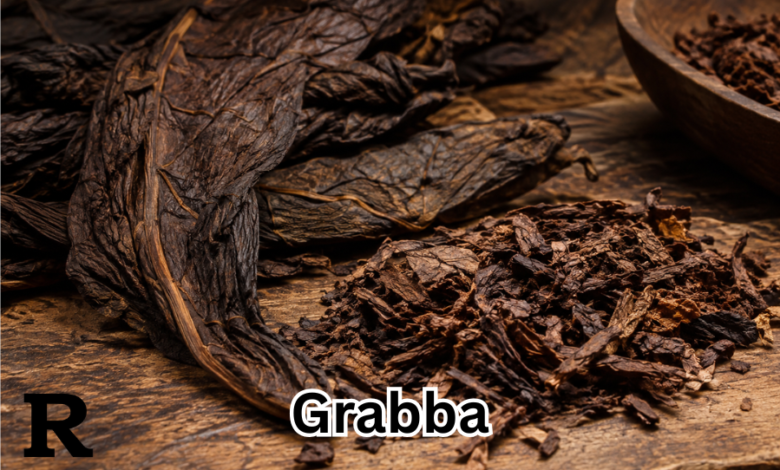
Grabba is a tobacco term with strong Jamaican and wider Caribbean associations, but its meaning has broadened as the product has moved into North American and international smoking culture. In everyday use, grabba may mean strong tobacco leaf, broken or crushed pieces of cured leaf, or a packaged tobacco product sold under the same description. That flexibility explains why people often confuse grabba with fronto leaf, cigar wraps or ordinary loose tobacco. The key point is that grabba is tobacco, not a separate drug or a standardised plant variety. Its modern identity sits at the intersection of Caribbean language, whole-leaf tobacco traditions, smoke-shop retailing and online culture.
What Does Grabba Actually Mean?
The simplest definition of grabba is tobacco, particularly strong or minimally processed tobacco leaf. Jamaican Patois references use the word in that sense, while contemporary tobacco retailers and smoking communities often apply it to dark cured leaf that has been broken, crushed or shredded.
There is no single international product standard for “grabba”. One packet may contain small pieces of tobacco leaf, another may contain coarsely shredded leaf, and another seller may use the term for a whole cured leaf. The name alone does not reveal the exact tobacco variety, strength, curing method or nicotine level.
Why Grabba Is Closely Linked With Jamaica and the Caribbean
Grabba is strongly associated with Jamaican speech and smoking culture. The term has travelled internationally through Caribbean communities, music, migration and retail networks, particularly in cities with large Jamaican and West Indian populations.
Its visibility in the United States grew alongside demand for whole-leaf tobacco products sold as grabba, fronto or both.
The exact origin of the word is less certain than its cultural association. Some popular accounts claim it developed from a phrase resembling “grab a” piece of leaf. That explanation is widely repeated, but it is better treated as informal folklore rather than established linguistic fact. What can be stated confidently is that “grabba” has a tobacco-related meaning in Jamaican usage.
Grabba vs Fronto Leaf: Why the Terms Get Confused
The relationship between grabba and fronto is one of the biggest sources of confusion. In many smoking communities, fronto refers to a whole cured tobacco leaf, while grabba refers to portions of that same type of leaf after it has been torn, crushed or broken down.
That distinction is useful, but not universal. Some retailers use “grabba leaf” for whole leaves, while others sell “fronto” and “grabba” as separate formats. Packaging details are often more informative than the product name.
In practical terms, fronto and grabba usually belong to the same broad whole-leaf tobacco culture. The difference is often about form and intended use rather than a completely different species of tobacco.
Is Grabba a Particular Tobacco Variety?
Not necessarily. Products described as grabba may come from different tobacco varieties and growing regions. Dark air-cured leaves are common because they develop a stronger flavour, darker appearance and heavier body than many cigarette tobaccos.
Whole-leaf sellers may grade leaves by colour, thickness, moisture and intended use. None of those characteristics creates a universal “grabba species”.
How Grabba Differs From Cigarette Tobacco
Commercial cigarette tobacco is usually cut into fine strands and blended for consistency. Manufactured cigarettes may also contain added ingredients, paper, filters and carefully controlled moisture levels.
Grabba is generally presented in a more recognisable leaf form. It may be sold as intact leaf, strips, flakes or coarse pieces, giving it a more rustic appearance than factory-cut cigarette tobacco. That visible naturalness can lead some people to assume it is safer.
That assumption is misleading. Tobacco naturally contains nicotine, and harmful compounds are produced or released when tobacco is burned. The US Food and Drug Administration states that nicotine is naturally present in tobacco plants and that combustible tobacco products are the most harmful category of tobacco products.
Why People Use Grabba
Grabba is used for its tobacco flavour, nicotine content and the way cured leaf changes the character of smoke. Some users consume tobacco leaf on its own, while others combine pieces with cannabis in a spliff or use larger leaf sections as a wrap.
Its popularity is also cultural. For some consumers, the product is connected to Jamaican or Caribbean smoking traditions and to a preference for whole-leaf tobacco over highly processed cigarillos or cigarette blends.
The modern market has expanded beyond those roots, with crushed-leaf products and branded pouches now common in specialist retail. “Grabba” can therefore function as both a cultural term and a retail category.
Does Grabba Contain Nicotine?
Yes. If a product is genuine tobacco leaf, it naturally contains nicotine. The amount can vary according to plant variety, leaf position, curing, moisture, age and the quantity used.
It is inaccurate to assume that “natural”, “organic”, “whole leaf” or “additive-free” means nicotine-free. Nicotine is part of the tobacco plant itself rather than something that has to be added during manufacturing.
Nicotine is addictive because it affects the brain’s reward system and can create dependence and cravings. The FDA notes that all tobacco products contain nicotine and repeated exposure can make quitting difficult.
Is Grabba Stronger Than Ordinary Tobacco?
People often describe grabba as strong, but there is no single strength level that applies to every product. Whole tobacco leaves vary substantially, and commercial grabba products do not all use the same variety or preparation method.
A dark, thick, air-cured leaf may feel stronger in flavour and throat sensation than a mild cigarette blend, yet sensory intensity is not a reliable measure of nicotine dose. Without laboratory testing, a consumer cannot accurately determine nicotine exposure from colour, aroma or harshness alone.
Claims that grabba is always stronger than cigarettes are unreliable; strength depends on the product and amount consumed.
Is Grabba Safer Because It Is Natural?
No. “Natural tobacco” can still expose users to addictive nicotine and toxic substances. Burning tobacco creates smoke containing chemicals linked with cancer, cardiovascular disease and chronic lung conditions.
The US Centers for Disease Control and Prevention says cigar smoke contains many of the same toxic and cancer-causing chemicals found in cigarette smoke. It also notes that exposure can occur even when a cigar smoker says they do not inhale deeply.
The same principle matters for whole-leaf tobacco. Minimal processing does not remove the health risks created by combustion. Descriptions such as “raw”, “natural” or “additive-free” should not be interpreted as health claims.
Grabba, Cannabis and Mixed Smoking
One reason the term appears frequently online is its association with cannabis. In some communities, small amounts of tobacco leaf are combined with cannabis, producing a mixture commonly described as a spliff.
This changes the risk profile because the user is exposed not only to cannabis smoke but also to nicotine and tobacco combustion products. Mixing the two can also make it harder to separate nicotine dependence from a cannabis-smoking routine.
Grabba itself should not be mistaken for cannabis. It is tobacco. Its frequent appearance in cannabis-related conversations reflects how it is used, not what the substance actually is.
What Buyers Should Know About Product Labels
Because grabba is not a tightly standardised product category, labels deserve close attention. A package may describe whole leaf, crushed leaf, shredded tobacco, flavoured tobacco or another preparation.
Consumers should also be cautious with vague claims about purity, strength or health. Terms such as “all natural” say little about nicotine exposure or the toxic effects of smoke. The presence or absence of certain additives does not make combustible tobacco safe.
For retailers, classification matters because requirements differ by country and jurisdiction.
Grabba and Tobacco Law in the United Kingdom
For UK readers, grabba should be treated as a tobacco product when it is made from tobacco leaf. As of October 2026, tobacco retailing remains subject to age restrictions, packaging, display and other regulatory controls.
The Tobacco and Vapes Act 2026 introduced a major change that will take effect from 1 January 2027: UK retailers will be prohibited from selling tobacco products, herbal smoking products and cigarette papers to anyone born on or after 1 January 2009. The government has also announced related changes to retailer notices and enforcement arrangements.
Grabba and Tobacco Law in the United States
In the United States, federal law prohibits retailers from selling tobacco products to anyone under 21. The FDA says the rule applies to tobacco products generally, including cigars, cigarette tobacco, roll-your-own tobacco and other covered products. Retailers must also follow state and local laws where those rules are stricter.
Businesses selling or modifying loose tobacco should understand the federal and local rules that apply to their product.
Why Grabba Has Become More Visible Online
The term has moved far beyond its original regional setting. Social media, music culture, specialist smoke shops and e-commerce have introduced “grabba” to consumers who may have little direct connection with Jamaica or the Caribbean.
That wider visibility has also changed the word. In one context it remains Jamaican slang for tobacco. In another, it is a retail label. Elsewhere, it describes a specific texture or preparation of fronto leaf.
The original cultural meaning remains important even as commercial usage becomes broader and less precise.
Conclusion
Grabba is best understood as a tobacco term shaped by Jamaican and Caribbean culture and later expanded through international retail and smoking communities. It commonly refers to strong cured tobacco leaf, especially when the leaf is broken, crushed or prepared for smoking, although sellers do not use the term consistently.
Its natural appearance should not obscure the central fact: grabba is tobacco, and tobacco contains addictive nicotine and carries serious health risks when burned. The most useful way to understand any product labelled grabba is to look beyond the name, identify its actual tobacco form and ingredients, and consider the legal and health rules that apply where it is sold.
FAQs
What is grabba?
Grabba is a Jamaican and Caribbean-associated term for tobacco or tobacco leaf. In modern retail use, it may describe whole cured leaf, broken pieces, crushed tobacco or shredded leaf. The exact form depends on the seller, so “grabba” is better viewed as a cultural and commercial tobacco term than a single standardised product.
Is grabba the same as fronto?
They are closely related but not always used in exactly the same way. Many people call the intact tobacco leaf “fronto” and the broken or crushed pieces “grabba”. Some retailers, however, use the words interchangeably. Product descriptions are therefore more reliable than the name alone.
Does grabba contain nicotine?
Yes. Grabba made from tobacco leaf naturally contains nicotine. The amount varies from product to product, and visual appearance cannot reliably show nicotine strength. Labels such as natural or additive-free do not mean nicotine-free.
Is grabba safer than cigarettes?
No combustible tobacco product is safe. Grabba may look less processed than cigarette tobacco, but burning tobacco still produces harmful smoke and exposes users to nicotine. Health authorities warn that tobacco smoke contains toxic and cancer-causing substances.
Is grabba legal in the UK and US?
Tobacco-leaf products can be sold legally when businesses comply with relevant tobacco laws. In the US, the federal minimum age for tobacco sales is 21. In the UK, new age-of-sale rules under the Tobacco and Vapes Act 2026 take effect on 1 January 2027, alongside other regulatory changes.