
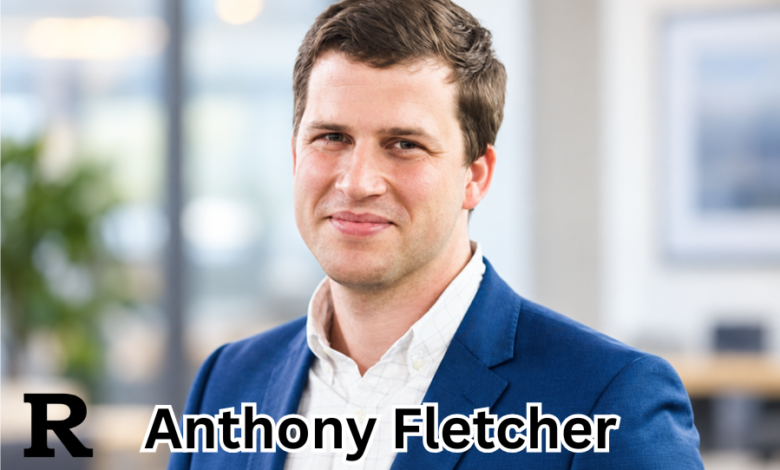
Anthony Fletcher has built a career where food, science, technology and consumer behaviour meet. Best known for leading Graze through rapid expansion and its acquisition by Unilever, the British executive later returned to entrepreneurship with Believe in Science and its Urban Legend bakery brand.
Fletcher’s record shows a repeated interest in using data, product experimentation and scientific thinking to challenge established consumer-goods models. From personalised snack boxes to lower-calorie doughnuts, he has consistently worked on businesses where technology influences both products and distribution.
Quick Bio
| Field | Details |
|---|---|
| Full Name | Anthony Fletcher |
| Nationality | British |
| Profession | Entrepreneur, Business Executive, Food-Tech Innovator |
| Education | Master’s Degree in Chemistry, University of Oxford |
| Known For | Former CEO of Graze |
| Previous Company | Innocent Drinks |
| Graze Role | CEO, 2012–2020 |
| Major Achievement | Helped expand Graze internationally and through its acquisition by Unilever |
| Founded | Believe in Science |
| Consumer Brand | Urban Legend |
| Industry | Food Technology, FMCG, Consumer Goods |
| Current Status | Entrepreneur and business executive |
| Net Worth | Not publicly verified |
Why Anthony Fletcher Became Closely Associated With Graze
Graze was already an unusual business when Fletcher joined in 2009. Founded in 2008, it operated as an online subscription service sending portioned snack boxes directly to customers, using ratings and previous selections to personalise future boxes.
Fletcher joined from Innocent Drinks and took responsibility across marketing, sales and innovation. By late 2012, he had become chief executive, around the time private equity group Carlyle took a majority stake.
Under Fletcher, Graze moved beyond letterbox deliveries into physical retail while continuing to use the consumer data accumulated through its subscription model. That combination became central to its identity: a food brand informed by direct customer data but capable of competing on supermarket shelves.
From Oxford Chemistry to Consumer Products
Fletcher’s route into fast-moving consumer goods was unconventional. He studied chemistry at the University of Oxford, earning a first-class master’s degree, and also undertook scientific research associated with Oxford and Princeton University.
His scientific training became an important thread in his later business career. He moved away from academic research because he wanted to apply technology, experimentation and analytical thinking within growing companies.
In 2004, he joined Innocent Drinks, then one of Britain’s most closely watched emerging consumer brands. His work included production and innovation responsibilities, giving him practical exposure to the operational side of scaling a food and drink business.
The experience shaped his later approach, combining product development and commercial growth with an increasingly strong interest in personalisation and data.
Turning Graze Into a Multichannel Business
The most significant phase of Fletcher’s public career came during his years as Graze chief executive.
The subscription model gave Graze unusually detailed information about individual taste preferences. Customer ratings helped the company learn which flavours and formats resonated with different groups and influenced product development as the business expanded.
Graze entered the United States and achieved a reported annualised revenue run rate of about $32 million during its first year there. It also moved decisively into traditional retail, eventually placing products in tens of thousands of stores across the UK and US.
Subscription commerce had established the brand, but supermarket and convenience-store distribution allowed Graze to reach consumers who had never used its online service. Fletcher became associated with an early version of a now-familiar model: learn from digital customers and use those insights to inform wider retail expansion.
The Unilever Acquisition and Fletcher’s Exit
Graze’s growth attracted major food and consumer-goods groups. In February 2019, Unilever acquired the business from Carlyle.
The terms were not officially disclosed, although contemporary reports placed the valuation around £150 million. That figure is best treated as a reported valuation rather than a confirmed transaction value.
For Fletcher, the sale capped nearly a decade at Graze. He had joined in 2009, became chief executive in 2012 and helped guide the company through private-equity ownership, US expansion, retail growth and acquisition by one of the world’s largest consumer-goods businesses.
He remained after the takeover to support the transition. In 2020, Unilever announced that Fletcher would step down as chief executive, with Joanna Allen appointed as his successor.
His departure reflected a return to earlier-stage innovation rather than a long-term role inside a global corporation.
Believe in Science and the Urban Legend Experiment
After Graze, Fletcher founded Believe in Science, a research-led food business incorporated in 2020. Its most visible consumer brand became Urban Legend, launched in 2021.
The proposition focused on sweet bakery. Urban Legend attempted to redesign doughnuts using food science and proprietary production methods, including air-frying technology, with the aim of reducing calories, sugar and fat while retaining the experience consumers expected from the category.
This differed from Graze. Graze used data and digital distribution to reshape snacking; Urban Legend intervened directly in formulation and manufacturing.
The company developed filled and ring doughnuts, expanded into retail distribution and attracted outside investment, including backing connected with Mondelēz International’s venture activities.
The concept arrived as manufacturers faced growing pressure to reduce products high in fat, sugar and salt. Urban Legend aimed to show that reformulation could go further than modest recipe changes.
Why Urban Legend Ran Into Difficulty
Innovation did not remove the financial risks of building a manufacturing-heavy food company.
Urban Legend required substantial investment in product development, specialist production and retail expansion. Trade reports said the business raised more than £13 million across multiple funding rounds.
However, it also accumulated significant losses. Accounts for Believe in Science for the year to July 2024 showed continued financial pressure, and a later attempt to raise additional funding failed.
In September 2025, Fletcher confirmed that the business was preparing to enter administration after the late collapse of a fundraising round. Believe in Science formally entered administration on 25 September 2025.
Reports at the time said buyers were interested in the company’s intellectual property and patented technology even as the trading operation faced closure. The episode highlights a difficult reality of food-tech entrepreneurship: technology can attract strategic interest while the company commercialising it still struggles with the cost of scaling.
As of 2026, UK corporate records continue to list Believe in Science as being in administration, with the administration period extended. Fletcher remains listed as a director and a person with significant control.
A Career Built Around Data, Science and Experimentation
Across Innocent, Graze and Urban Legend, a consistent pattern runs through Fletcher’s work.
He has repeatedly entered familiar consumer categories—smoothies, snacks and doughnuts—and approached them through systems, experimentation and product innovation. At Graze, data helped shape customer recommendations and retail development. At Urban Legend, chemistry and manufacturing technology were applied to reformulating bakery products.
That helps explain why Fletcher is often viewed as a food-tech entrepreneur rather than simply a food-industry executive.
His record also shows that entrepreneurship does not move in a straight line. Graze became a notable acquisition story, while Urban Legend encountered severe financial difficulties despite sophisticated technology, institutional backing and national retail ambitions.
Together, those experiences combine a major consumer-brand exit with the harder realities of funding and scaling a science-led manufacturing venture.
Where Anthony Fletcher Stands Today
Fletcher remains professionally associated with Believe in Science through public corporate records, although the company is in administration and Urban Legend’s former trading model cannot accurately be described as an active growth business.
Public information about any separate new operating venture is limited, and reliable documentation is not currently strong enough to present another company or executive post as his definitive principal role.
His established record, however, already places him among the more interesting British executives to have crossed from scientific training into digitally driven consumer goods.
Conclusion
Anthony Fletcher’s career is defined by an unusual combination of scientific training, consumer-brand leadership and technology-led experimentation. His most prominent achievement remains his role in transforming Graze from a digital snack subscription business into a multichannel brand ultimately acquired by Unilever.
Urban Legend produced a more difficult chapter, demonstrating both the ambition and financial risk involved in bringing food science into large-scale consumer manufacturing. Taken together, those experiences make Fletcher notable not simply as a former chief executive, but as a British entrepreneur whose career has repeatedly tested how data and science can reshape familiar food categories.
FAQs.
What is Anthony Fletcher best known for?
Anthony Fletcher is best known for serving as chief executive of Graze. He helped expand the healthy-snack company into the United States and physical retail before leading the business through its 2019 acquisition by Unilever.
Did Anthony Fletcher found Graze?
No. Graze was founded in 2008, before Fletcher joined the business. He arrived in 2009, initially working across marketing, sales and innovation, and became chief executive in 2012.
Where did Anthony Fletcher study?
Fletcher studied chemistry at the University of Oxford, where he earned a first-class master’s degree. He also undertook scientific research associated with Oxford and Princeton University before moving into consumer goods.
What was Urban Legend?
Urban Legend was the consumer bakery brand developed by Fletcher’s company Believe in Science. It used food science and proprietary production technology, including air frying, to create doughnuts and other sweet bakery products with lower levels of calories, fat and sugar than conventional alternatives.
What happened to Urban Legend?
Believe in Science, the company behind Urban Legend, entered administration in September 2025 after a planned fundraising round collapsed. Trade reports said there was buyer interest in its intellectual property and patented technology. UK corporate records continued to show the company in administration during 2026.
What is Anthony Fletcher’s net worth?
There is no reliable, publicly verified figure for Anthony Fletcher’s personal net worth. Reported company valuations or acquisition prices should not be treated as equivalent to his personal wealth because ownership structures, investor stakes and transaction terms differ.
READ THIS TOO: Timothy Armoo: From Fanbytes Founder to Investor and Bestselling Author


One Comment