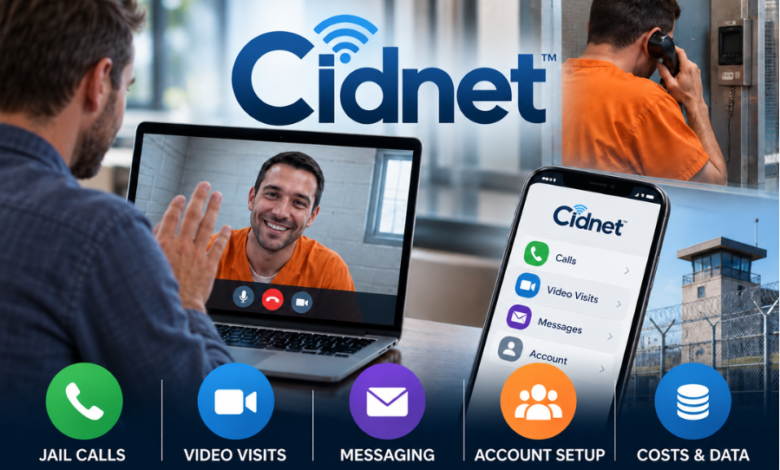
Cidnet provides digital communication services for people in US correctional facilities and the relatives or friends trying to reach them. Operated by Encartele, the platform brings telephone calls, video visitation and electronic messaging into an account-based system that participating jails can supervise. For families, the priorities are approval, contact and cost. Relatives may discover it through jail instructions or an unexpected call.
Yet Cidnet is not simply a substitute for an ordinary messaging app. Facilities decide which functions are available, approve contacts and set restrictions on communication. It also supplies technology used inside jails. This guide explains how the platform works, its data-based pricing, privacy limits and common difficulties.
What Is Cidnet, and Who Runs It?
Cidnet, sometimes styled CID Net, is a correctional communications platform developed by Encartele, a US company serving detention facilities. It uses internet-based services to connect approved outside contacts with people in custody.
Encartele describes its wider system as a platform for correctional operations. It claims to serve more than 450 facilities nationwide, a figure not independently audited here. Individual sheriff’s offices also identify Cidnet as their provider, confirming that the service operates in real county jails.
For example, the Menominee County Jail in Michigan identifies Cidnet as its system for calls, messages and video visits. Pottawattamie County in Iowa requires an Encartele/Cidnet account for its video visitation arrangements. Local jail instructions remain decisive.
Getting Started: From Registration to an Approved Contact
Creating an account does not automatically authorise communication. According to Cidnet’s published instructions, new users register with their name, email address and time zone, choose the relevant state and facility, accept the terms and complete email verification. Users also set a password and security questions.
Once signed in, users add an incarcerated person by selecting the state and facility, searching by name and confirming the appropriate relationship. The request can then require approval. Cidnet says contact requests are typically processed within one or two days, but the actual timing depends on facility staffing and procedures.
Additional checks may include telephone verification by text or call and uploading government-issued photo identification. Personal details should only be entered through the provider’s authentic customer portal, not unsolicited messages claiming to arrange visits.
Calls: Why You Cannot Simply Ring Someone in Jail
Cidnet’s voice service allows an incarcerated individual to initiate a call to an approved outside contact. The recipient can accept or block it, provided the relevant account and communication arrangements are in place. Unlike ordinary telephone services, family members cannot directly dial the person inside and expect an incoming call to be connected.
Availability depends on the facility, the individual’s privileges and device access. A missed call need not indicate an account problem. Check phone verification and facility rules before altering payment details.
Video Visits: Remote Convenience, Local Rules
Video visitation is often the most valuable feature for families unable to travel. Participating facilities may permit a remote session from a suitable personal device or an on-site session using equipment at the jail. Both involve scheduling and possible staff approval.
Cidnet’s instructions direct users to the video scheduling area, where they select a contact, available date, duration and time slot. Arrive early for local appointments; remote sessions require reliable internet and camera and microphone permissions.
Rules differ substantially. Effingham County, Illinois, states that its local kiosk visits are free but must be booked 48 hours beforehand. Other facilities set different booking periods, visiting hours and dress codes. Always follow your jail’s schedule.
Messages and Photographs Are Not Ordinary Private Chats
Where the Mail feature is available, approved contacts can exchange digital messages and may be able to submit photographs. Cidnet refers to these interactions as utilisation events, and staff can review or reject material under the facility’s policies.
Messages may be delayed; prohibited content can be rejected or trigger restrictions. Cidnet’s guidance states that sending a message consumes data even if the facility subsequently declines it. Check the rules before sending.
How Cidnet Pricing and Data Balances Work
Cidnet’s distinctive feature is its data-based billing model. Rather than assigning a separate traditional per-minute charge to every call or video visit, the platform describes a shared data balance for Voice, Video and Mail. Each session becomes a Cidnet Utilization Event (CUE), recording data consumed.
Encartele calls the underlying approach Data Token Access Protocol. Its customer-facing purchase interface has displayed a charge of $0.30 per megabyte, but users should check the live purchase screen and applicable terms for the price, charges and options offered to their own account. Data consumption—and therefore total cost—varies by activity.
Data billing does not guarantee savings over competitors. Video typically requires more bandwidth than a short text message, so families should monitor their remaining balance rather than treating purchased megabytes like unlimited access. Compare the total amount paid, data used and any relevant fees. Cidnet also supports transferring data to an incarcerated contact, although its FAQ notes that some facilities do not permit transfers.
Privacy, Monitoring and the Limits of Confidentiality
Cidnet tells families that ordinary voice calls, video visits and electronic messages are monitored and recorded by correctional staff. Its administrative materials describe searchable communication records, transcription, content screening and tools intended to flag suspicious patterns.
That oversight creates a clear privacy boundary. A video visit from home may feel personal; it should not be treated as an encrypted private family conversation inaccessible to jail staff. Avoid sharing passwords, sensitive details or prohibited material.
Legal communications require particular care. Confirm privileged communication arrangements with the facility, not through a family account. In June 2026, Island County Jail in Washington announced a separate registration process for verified attorneys seeking privileged calls and professional video sessions, showing how distinct those arrangements can be.
Common Problems and Practical Fixes
If a person cannot be found in the directory, Cidnet identifies two possible explanations: the facility has not yet added them, or they have been released or transferred. Check the current custody location with the jail before purchasing additional data. If the person moves to a non-participating facility, the original account may no longer provide access to them.
For dropped video, Cidnet recommends reliable Wi-Fi or Ethernet. Its support guidance also recommends Google Chrome when a device is labelled unsupported and checking the browser’s camera and microphone permissions. Technology cannot override facility restrictions.
A session marked complete without starting may mean the incarcerated participant did not join within the allowed window. Cidnet says unused reserved data is returned in this situation. Blocked accounts should be referred to support.
Unused Data, Buybacks and Customer Support
Unused balances matter after transfer or release. Cidnet’s FAQ describes a buyback request through the account’s Support area. Users choose the category for selling back unused data and explain why they are requesting it. Its finance department handles requests, with repayment to the account or by cheque.
The published guidance specifies a five-day wait after the most recent transaction before submitting a buyback request. There is no blanket refund guarantee: rejected messages still consume data.
For unresolved issues, the official support number published by Cidnet is 888-984-1903. The company asks callers to use the designated support prompt and leave details of their account and facility. Users can also open written support requests. Keep transaction records and failed-session dates for troubleshooting.
Beyond Family Communication: The Technology Inside Jails
The company’s ambitions extend well beyond three familiar communication features. Its cidOS platform is presented as a common system for managing devices and applications, including approved educational materials, digital books, commissary orders, facility forms and legal reference resources. It also promotes digital signage, environmental sensors and administrative reporting tools.
These tools may replace paperwork and expand information access through secure devices. Availability is not universal. The jail determines which applications and hardware are deployed. Purchasing a Cidnet account does not guarantee access to games, learning resources or every advertised facility application.
Regulation and the Question of Fair Prices
US prison and jail communications operate within a contested regulatory landscape. The Federal Communications Commission regulates covered incarcerated people’s communications services, and its November 2025 order revised interim rate caps for audio and video calls. The revised requirements had an April 2026 compliance date, while other rules address disclosures and accessibility.
Regulation has continued to evolve. In September 2026, the FCC adopted instructions for a fresh mandatory industry data collection, with provider submissions due in December 2026 to inform future rate-setting. Affordability should therefore be judged against actual charges and current rules.
Alternate pricing rules are technical. Consumers should not assume the existence of federal rate limits makes any data package automatically compliant, inexpensive or suitable for their needs. For disputed charges, contact the provider or relevant regulator.
Why Access Matters, and Where Its Limits Remain
Staying in touch can affect relationships, emotional wellbeing and preparation for release. The US National Institute of Justice’s CrimeSolutions review associates prison visits with lower reoffending, without proving any particular product produces that result.
Remote contact can remove travel barriers, particularly for children, older relatives and people living far from a facility. Devices, cost and approvals remain barriers. Video access is best understood as an additional way to maintain contact, not an automatic replacement for meaningful in-person visiting opportunities.
Conclusion
Cidnet is both a family-facing communications service and part of a broader technology system used by American jails. Its combination of calls, scheduled video visits, messaging and shared data balances offers a different approach to staying connected, but it operates under facility rules and extensive monitoring. The most useful starting point is to confirm the correct jail, complete contact approval and review the price and conditions displayed for that specific account. Clear costs, privacy and access rules matter equally.
FAQs
Is Cidnet free to use?
Creating an account is separate from paying for communication data. Cidnet generally uses prepaid data for calls, video visits and messaging, although individual facilities may offer free on-site video appointments. Check the participating jail’s instructions and the purchase screen before assuming a particular visit or message is free.
How do I log in to Cidnet and find someone?
Use the official Cidnet customer portal, register or sign in, and complete the required verification. Then choose the state and participating facility and search for the incarcerated person by name. If the person does not appear, confirm their location with the jail; they may not yet be entered in the system.
Can I call an incarcerated person directly using Cidnet?
No. The incarcerated person must initiate a permitted voice call from inside the facility. You can receive it using an approved and verified number, subject to account arrangements and institutional rules. If calls are failing, check your phone verification and contact the provider or facility for guidance.
Does Cidnet record video calls and messages?
Yes. Cidnet states that ordinary family communications can be monitored and recorded, including voice, video and digital messages. Do not assume private confidentiality merely because the visit happens from your own device. Attorneys and other professionals should ask the facility about separate privileged communication procedures.
Can I get money back if someone is released or transferred?
Cidnet provides a process for requesting a buyback of unused data from the account’s Support section. Its FAQ specifies waiting five days after the latest transaction before applying. Approval and repayment should follow the provider’s current terms; data already consumed, including on declined messages, is not automatically refundable.