
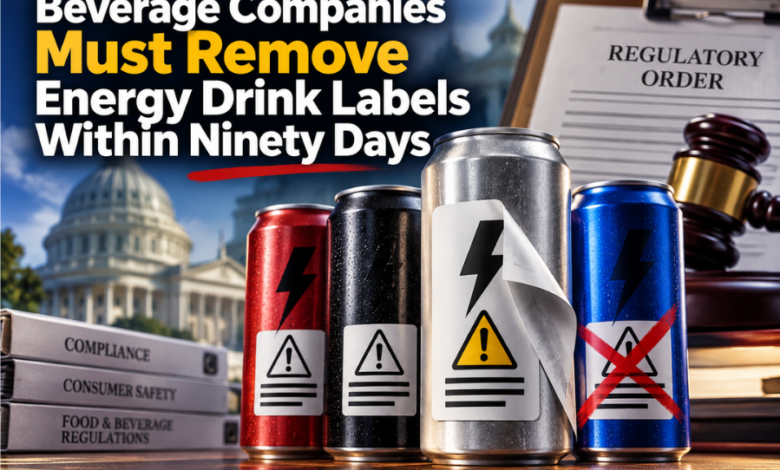
India’s food regulator gave major beverage manufacturers 90 days to stop describing certain high-caffeine products as “energy drinks”, challenging one of the industry’s most recognisable selling points. The instruction affected brands associated with PepsiCo, Red Bull, Monster Beverage, Reliance Consumer Products and Hell Energy. But the September 2026 deadline did not settle the dispute: court decisions have since created different conditions for different companies.
The disagreement concerns much more than the wording on a can. It raises questions about misleading health claims, the cost of changing packaging, and whether regulators can reverse established labelling practices without first hearing manufacturers’ objections. As the legal battle continues, India’s fast-growing stimulant drinks market offers an important case study in how governments police the promises behind consumer products.
What India’s Ninety-Day Order Required
The Food Safety and Standards Authority of India (FSSAI) began its enforcement action with directions dated 30 June and 1 July 2026. It objected to the expression “energy drink” and similar descriptions on products it considered improperly labelled, alongside claims implying particular benefits for the body or mind.
After discussions with industry representatives in July, companies were given a 90-day period to make the requested changes. Reporting at the time identified 29 September as the expected compliance deadline. The instruction was directed at products sold in India, not every can bearing these brands worldwide.
Crucially, the measure was about descriptions and promotional claims rather than an outright prohibition on caffeine-containing drinks. Manufacturers could continue operating subject to applicable standards and enforcement decisions, although the treatment of existing stock soon became contentious.
Which Beverage Brands Were Affected?
The original enforcement notices covered products associated with six prominent names: Red Bull, PepsiCo’s Sting and Adrenaline Rush, Monster Energy, Hell Energy, and Reliance Consumer Products’ Campa Energy Gold Boost. Monster’s subsequent court proceedings also referred to Predator Energy.
For multinational groups, the practical question was how to retain familiar identities without using descriptions challenged by FSSAI. A prominent word can appear in several places: the product name, the category statement, an advertising message and materials supplied to distributors.
Why FSSAI Challenged the Term “Energy Drink”
FSSAI argued that India had not established a separate product standard formally named “energy drink”. It considered the category description potentially misleading, particularly when accompanied by assertions that a beverage could revitalise the body and mind or relieve general weakness.
The Existing Rules for Caffeinated Beverages
India does have technical standards for carbonated and non-carbonated caffeinated beverages. The relevant FSSAI regulations specify total caffeine content of at least 145 milligrams and no more than 300 milligrams per litre for the regulated category, alongside other compositional conditions.
That distinction is central to the dispute. The absence of a standalone category called “energy drink” does not mean drinks containing caffeine are unregulated. The question is whether manufacturers may use that familiar commercial expression while meeting the standards for caffeinated beverages.
An earlier FSSAI advisory complicates the regulator’s position. In March 2024, while addressing online retail categorisation, the authority expressly said the term could be used for products licensed under specified categories of carbonated and non-carbonated water-based flavoured drinks. Manufacturers later cited that clarification in court.
The Deadline Passed, but the Courts Changed the Picture
On 29 September 2026, the Delhi High Court set aside the direction issued to Red Bull. The court’s decision centred on procedure: the manufacturer had not been given an adequate opportunity to present its case before the order was imposed.
That judgment was not a sweeping scientific endorsement of energy drinks. Nor did it definitively establish that every disputed claim is lawful. The regulator retained the possibility of reconsidering the issue through proper procedure, and Reuters reported that officials intended to appeal.
PepsiCo and Monster took separate legal action. On 6 October, the Delhi High Court temporarily stayed the challenged orders affecting their products, noting the absence of a show-cause notice and hearing. However, the interim relief came with an important limit: companies could sell stocks already manufactured by that date, but the orders did not authorise fresh production carrying the contested description.
PepsiCo Warned of a Supply Squeeze
At a further hearing on 15 October, PepsiCo argued that restrictions on new production could leave its leading products unavailable across India within approximately two months. Its lawyers pointed to the difficulty of replacing pre-printed cans and managing a wide distribution network.
The court did not then permit PepsiCo to restart manufacturing with the disputed label. Reuters reported that a further hearing was scheduled for 30 October. As of 19 October 2026, the underlying question of whether the regulator can lawfully prohibit the description remains unresolved across the affected companies.
Why Changing Two Words Is Expensive
On a factory floor, relabelling is not simply a matter of replacing text in a design file. Manufacturers must coordinate packaging artwork, printing, procurement, stock control, warehouse movements and retail replenishment. Imported packaging may have been ordered long before a regulatory deadline.
Existing products also move through wholesalers, neighbourhood shops and regional distributors. Recalling or separating stock can create costs even when the liquid inside the bottle remains unchanged.
In August, beverage companies sought substantially more time, reportedly asking for a year rather than 90 days. FSSAI resisted an extension, with government sources arguing that inventories could be cleared within the shorter window. Businesses disputed how realistic that was for millions of packages spread across different states.
A Growing Indian Market Raises the Stakes
India is attractive to beverage companies because demand extends beyond large cities and premium imported cans. PepsiCo’s Sting, launched locally in 2017, helped popularise inexpensive stimulant drinks, including small bottles sold at accessible prices.
Euromonitor research cited by Reuters describes strong growth and particular appeal among teenagers, young adults and rural consumers. The market has also been projected to reach approximately $1.6 billion by 2028, although forecasts remain estimates rather than guaranteed outcomes.
That expansion explains why a category name has commercial weight. “Energy” connects a product to alertness, performance and convenience, while retailers often organise shelves around the same terminology. Changing the visible description may therefore affect how consumers recognise a drink even if the formula stays constant.
The Public-Health Questions Behind the Packaging
Energy drinks often combine caffeine with ingredients such as sugar, flavourings and taurine, although formulations vary and some are sugar-free. Caffeine can improve alertness temporarily, but it cannot replace sleep or remove the effects of fatigue.
The US Food and Drug Administration identifies possible consequences of excessive caffeine consumption, including palpitations, anxiety, raised blood pressure and sleep disturbance. Individual responses depend on sensitivity, body size, medication and other factors.
For most healthy adults, the FDA cites 400 milligrams per day as an amount not generally associated with harmful effects. That is not a recommended target, an individual guarantee or an appropriate limit for children.
The label controversy should not be confused with a formal finding that every product named in the notices is unsafe. It concerns how drinks are presented and whether associated claims satisfy Indian law. Nevertheless, marketing becomes especially sensitive when highly caffeinated products appeal to young consumers.
Enforcement Reached Beyond New Delhi
The national dispute also had consequences at state level. Reuters reported seizures of beverage stocks in Rajasthan in July, including products sold under the Sting, Campa Energy and Red Bull names. Officials in Ladakh also described inspections and prospective seizure action focused on labels.
Such interventions illustrated the difficulty of managing enforcement before the legal position was settled. A product could be sitting in a local shop while its manufacturer sought clarification from the national authority or protection from a court.
How the UK and US Approach Energy Drinks
The Indian controversy differs from developments in England, where the government confirmed in July 2026 that it intends to prohibit sales of high-caffeine energy drinks to children under 16 from April 2027, subject to the legislative process.
England’s proposed restriction applies to drinks other than tea or coffee containing more than 150 milligrams of caffeine per litre. It targets access by age, including online sales and vending machines, rather than generally removing the words “energy drink” from adult-market packaging.
In the United States, the FDA says there is no separate federal regulation devoted specifically to the category named “energy drinks”. General food-safety and ingredient requirements still apply, and the agency encourages consumers to examine caffeine content carefully.
What Consumers Should Look for Now
A changed name does not necessarily signal a changed recipe. Consumers should pay attention to the stated caffeine quantity, container size, ingredient list and warnings rather than relying on the promise implied by the word “energy”.
Meanwhile, the presence of older-labelled stock does not, by itself, establish that it was unlawfully sold. The applicable court order, product and manufacturing date may all matter during this transitional period.
What Happens Next for Manufacturers?
The immediate issue is whether courts uphold, narrow or overturn the regulator’s actions after hearing fuller arguments. Future decisions could clarify the legal status of the category description and the procedure FSSAI must follow before restricting its use.
Companies must also decide how to manage production and packaging while proceedings continue. Whatever the eventual judgment, the dispute has made label approval, consumer claims and regulatory consistency central business issues for India’s caffeinated-drinks industry.
Conclusion
The directive that beverage companies must remove energy drink labels within ninety days began as a labelling intervention, but it has developed into a consequential test of regulatory authority and commercial fairness. Red Bull secured relief, while PepsiCo and Monster faced narrower interim permissions. With the central legal question still undecided, the outcome will shape how India balances consumer protection, established branding and the practical demands of a growing beverage market.
FAQs
Why were beverage companies told to remove energy drink labels within ninety days?
India’s FSSAI challenged the use of “energy drink” as a product description because it considered the category insufficiently defined and certain associated benefits misleading. The companies received a 90-day compliance period in 2026. The legal authority and procedure behind those directions are now being contested in court.
Did India ban Red Bull, Sting and Monster from being sold?
No blanket nationwide ban on consuming these beverages followed from the labelling instruction. The dispute primarily concerns product descriptions and manufacturing or sales under contested labels. Court decisions have allowed different forms of relief, making the position more complicated than a simple prohibition.
Did the September 2026 deadline still apply after the court decisions?
The original compliance deadline was widely identified as 29 September 2026, but subsequent Delhi High Court rulings altered enforcement for particular companies. Red Bull’s order was set aside, while PepsiCo and Monster received limited interim relief covering existing stock. Individual rulings must be read separately.
Does removing the energy drink wording reduce caffeine content?
Not automatically. A packaging change can leave the drink’s formulation unchanged. Consumers should check the caffeine declaration, serving size and ingredients when assessing any product, rather than assuming a revised name means a lower stimulant content or a health benefit.
Are the same ninety-day rules being introduced in Britain or America?
No equivalent blanket ninety-day relabelling order applies across the UK or United States. England plans restrictions on selling certain high-caffeine drinks to under-16s from April 2027, while the US regulates these beverages through broader food laws. Rules can still vary by jurisdiction and product.
